
In wellness, the most effective tools are often the quiet ones.
Not the ones that promise instant transformation, but those that work with the body’s natural rhythms, not against them.
Intermittent Vacuum Therapy (IVT) is one of those tools.
Originally inspired by research into blood flow and pressure regulation, IVT has found a natural place in modern recovery, longevity, and circulation-focused wellness routines. Not as a treatment. Not as a shortcut. But as a way to support how the body already moves, drains, and restores itself.
What is intermittent vacuum therapy?
Intermittent Vacuum Therapy, sometimes called intermittent negative pressure therapy or lower body negative pressure therapy is a non-invasive wellness technology that uses rhythmic changes in pressure around the lower body.
During a session, the lower part of the body rests inside a sealed chamber. The system alternates between:
- negative pressure (vacuum)
- normal atmospheric pressure
These cycles are gentle, controlled, and repeat over a set period of time.
It’s important to clarify one thing early.
Intermittent Vacuum Therapy (IVT) is a broad technology category used across different settings from clinical environments to wellness and recovery-focused applications.
On this page, we focus specifically on whole-lower-body intermittent vacuum therapy as it is used in wellness, recovery, and longevity-oriented routines, where the goal is to support circulation, fluid dynamics, and overall recovery rather than to address specific medical conditions.
Some IVT systems and protocols may be designed for regulated medical use and carry medical certifications. These applications follow their own clinical guidelines.
Why pressure changes matter
Circulation is not static.
Blood flow, venous return, and lymphatic movement all rely on pressure differences and rhythmic shifts in the body.
IVT works by gently exaggerating these natural dynamics.
When negative pressure is applied:
- blood is encouraged toward the lower extremities
- microcirculation is stimulated
- venous and lymphatic flow are passively supported
When pressure returns to normal, the system resets, and the cycle begins again.
This is why IVT is sometimes described as a form of “passive vascular training”, a way to engage circulatory processes without physical exertion.
Where intermittent vacuum therapy fits in modern wellness
At ProReset, we look at technologies through a simple lens:
Does this help the body recover more efficiently without adding unnecessary stress?
Intermittent vacuum therapy is often used in wellness settings for:
- circulation support in the lower body
- lymphatic flow support and fluid balance
- recovery after intense training or long periods of sitting
- travel-related heaviness and fatigue
- longevity-focused routines that prioritize consistency over intensity
It’s not about pushing harder.
It’s about creating better conditions for recovery.
What a typical IVT session looks like
Most intermittent vacuum therapy sessions are intentionally simple.
You lie comfortably, the lower body is sealed into the chamber, and the system runs pre-set or customized pressure cycles. Sessions typically last 20–30 minutes, with many protocols centered around ~25 minutes.
The sensation is often described as a gentle pull-and-release noticeable, but not overwhelming.
Many people choose IVT sessions:
- on recovery days
- after long flights or workdays
- alongside other low-impact wellness practices
IVT and light therapy: a complementary pairing
In modern wellness spaces, IVT is often combined with red and near-infrared light therapy.
Why?
Because these two approaches address different layers of recovery:
- vacuum therapy focuses on circulation and fluid dynamics
- photobiomodulation supports cellular energy and tissue-level processes
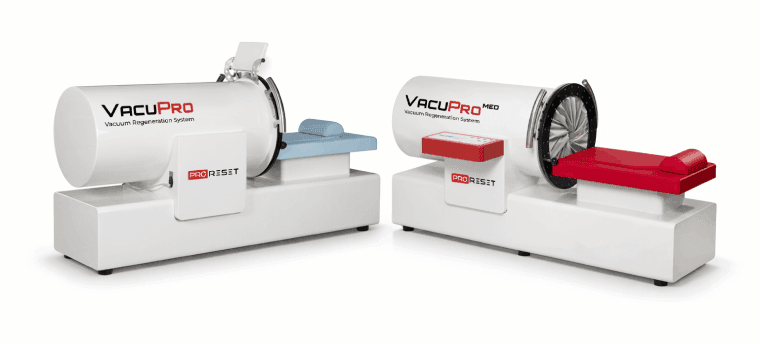
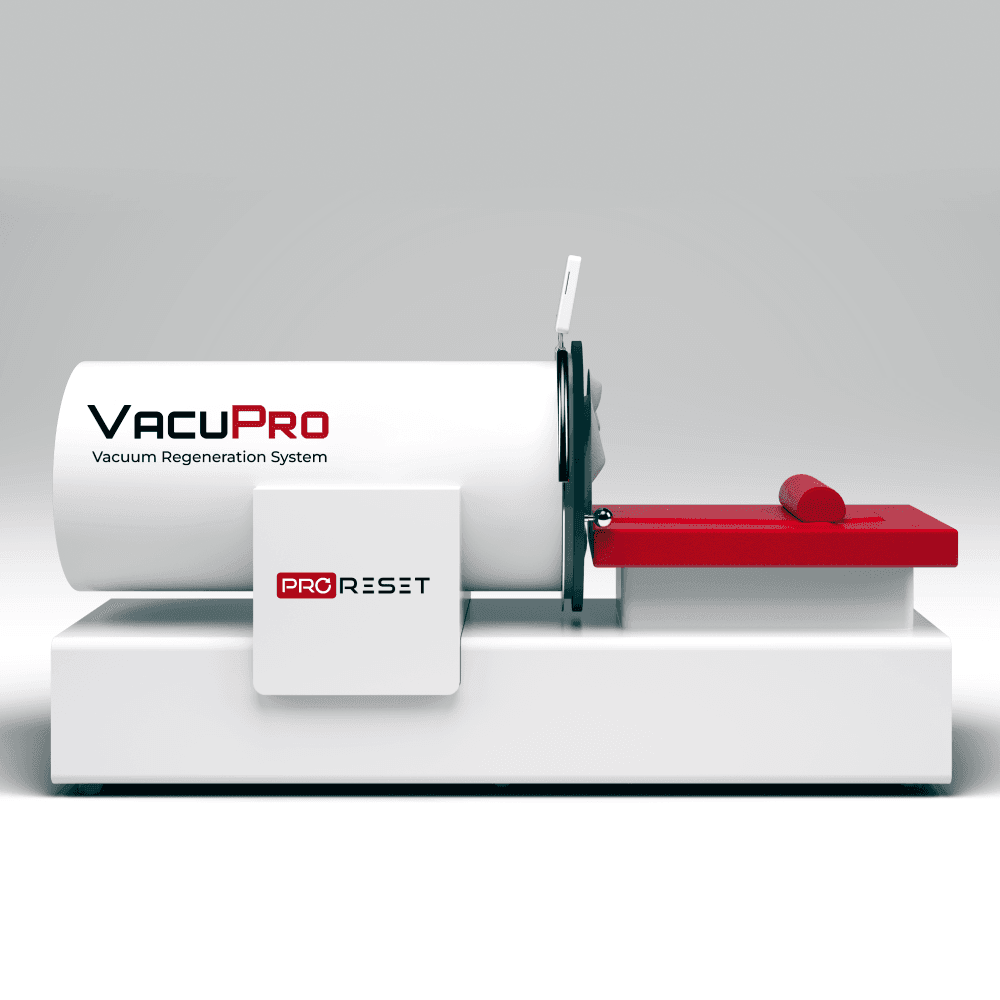
Systems like VacuPro integrate intermittent vacuum therapy with red (660 nm) and near-infrared (850 nm) light, allowing multiple recovery inputs in a single, streamlined session.
Choosing an intermittent vacuum therapy system
Not all IVT systems are created equal.
When evaluating a device for a wellness or longevity setting, it’s worth paying attention to:
- how smooth and stable the pressure cycles feel
- ease of use for both client and operator
- session comfort and noise levels
- ability to integrate with broader wellness protocols
- overall build quality for repeated, long-term use
The focus is on repeatability and consistency.
A calm tool for consistent recovery
Intermittent vacuum therapy works by creating space for the body to follow its natural rhythms, supporting circulation, fluid movement, and recovery.
In a wellness landscape that often rewards extremes, IVT offers something quieter:
a structured pause, a rhythmic reset, a gentle nudge toward balance.
That’s why it continues to find its place in longevity-focused, recovery-first environments.
FAQ: Intermittent Vacuum Therapy
How is intermittent vacuum therapy typically used by athletes?
Athletes often include intermittent vacuum therapy as part of their training and recovery routines.
It may be used before training, after training, or on rest days, depending on individual goals, workload, and overall recovery strategy.
How long does a typical IVT session last?
Session duration depends on the system and protocol. In many wellness and recovery settings, sessions are designed to fit comfortably within a short, structured time frame, often around 20–30 minutes.
Who commonly uses intermittent vacuum therapy?
Intermittent vacuum therapy is commonly used by:
- athletes and physically active individuals
- people with sedentary or travel-heavy lifestyles
- wellness and longevity-focused clients
- recovery-oriented studios and clinics
Usage and protocols are typically adapted to the individual and the specific system configuration.
Important note on usage
Intermittent vacuum therapy protocols, indications, and frequency vary depending on system certification, configuration, and professional guidance. For medical or regulated applications, the manufacturer’s documentation and clinical guidelines should always be followed.